NEW: Oral weight loss support now available here
- Home
- Chronic Conditions
- Diabetes Medication
- Empagliflozin (Jardiance)
Empagliflozin (Jardiance)




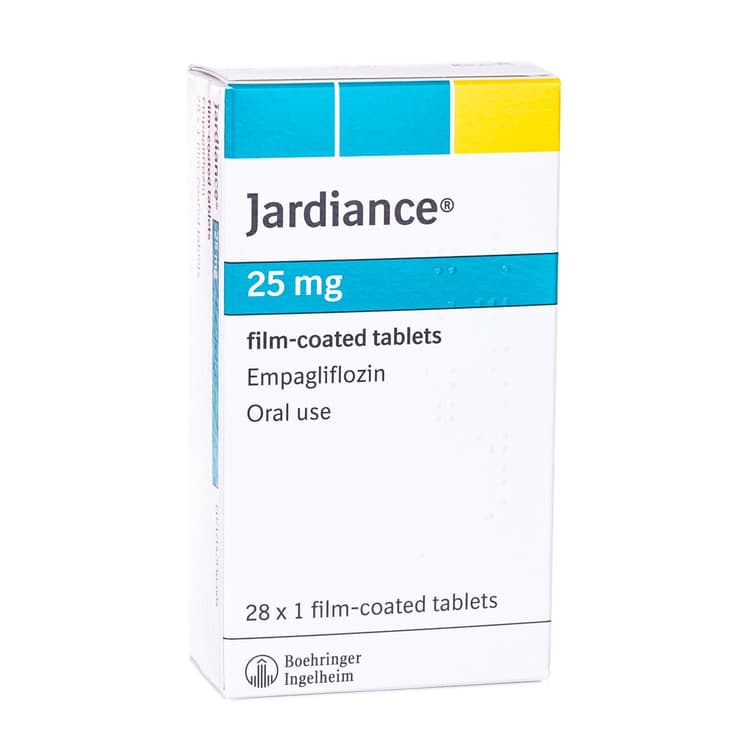


Images for illustrative purposes only
Type 2 diabetes is a long-term condition where blood sugar (glucose) rises too high because the body cannot use insulin properly. Empagliflozin (previously Jardiance) is a once-daily SGLT2 inhibitor prescribed to help manage it in adults.
- Effective type-2 diabetes treatment
- Lowers blood glucose levels
- Reduces cardiovascular health risks
- Genuine medication
- All drugs sourced in the UK



Subscribe & save with UK Meds Plus
Select your medication & delivery frequency
Browse by condition or medication and then choose how often you need them on the product page.
Complete a quick online consultation
A short medical questionnaire which allows our trusted prescribers to review your medication request.
Save money and get your meds delivered to your door
No additional fees, save money and time, and cancel your subscription at any time.

Save money on your meds
Save up to 15% with a subscription, get 10% off one-time orders and an extra 5% off additional subscriptions.
Discounted delivery
Free delivery after your first order and 10% off delivery on one-time orders.

Priority customer service
Your call or email will be prioritised when you contact us.
More information
An Overview From Our Clinical Team
Empagliflozin is one of the most widely prescribed treatments for type 2 diabetes in the UK, and here is what you most need to know before you consider it.
"Empagliflozin, which you may know by its original brand name Jardiance, belongs to a group of medicines called SGLT2 inhibitors. It lowers blood sugar by helping your kidneys clear excess glucose in your urine, and it is taken as a single tablet once a day. The same medicine is also licensed to treat chronic heart failure and chronic kidney disease, which is why your prescriber may mention your heart and kidneys as well as your blood sugar. Empagliflozin is a prescription-only medicine and it is not right for everyone, so if you have type 2 diabetes and want to know whether it could suit you, the safest first step is a short online consultation where a UK-registered prescriber reviews your health and your current medicines before recommending anything."
The UK Meds Clinical TeamEmpagliflozin at a glance
- Active ingredient
- Empagliflozin
- Also known as
- Jardiance (former brand name)
- Drug class
- SGLT2 inhibitor (also called a gliflozin)
- Manufacturer
- Boehringer Ingelheim
- Legal status
- Prescription-only medicine (POM)
- Licensed for
- Type 2 diabetes, chronic heart failure, chronic kidney disease
- Strengths
- 10mg and 25mg film-coated tablets
- How to take it
- One tablet once a day, with or without food
- How to get it
- Online consultation with a UK-registered prescriber
A Doctor's Overview

GP and surgeon, Dr Shane Charles (MBBS, MRCS, PgDip SEM) provides a simple explanation of the medication below:
"Jardiance is an agent used in the management of type-2 diabetes mellitus that works by increasing how much sugar is passed in the urine."
Because empagliflozin is a prescription-only medicine, a registered prescriber first reviews whether it is suitable for you, and if it is, it can be prescribed and delivered to your home. If you have any questions about a medication, you should always consult your doctor prior to starting treatment, to ensure that it is safe and suitable for you.
Is empagliflozin the same as Jardiance?
Yes, empagliflozin and Jardiance are the same medicine. Jardiance was the original brand name, and the manufacturer, Boehringer Ingelheim, now supplies the medicine under its active-ingredient name, empagliflozin. This is known as debranding, and it usually happens once a medicine's original patent has expired and it can be made more widely. The change is confirmed in the official product information (SmPC), which now lists the tablets as "empagliflozin (previously known as Jardiance)".1
If your prescription has switched from Jardiance to empagliflozin, here is the reassuring part: the tablets contain the same active ingredient, at the same strengths (10mg and 25mg), and you take them in exactly the same way. The box and blister strip may look different, but the medicine inside has not changed.
What is empagliflozin and how does it work?
Empagliflozin is an SGLT2 inhibitor, a type of medicine that lowers blood sugar by helping the kidneys remove excess glucose from the body. It works on a protein called sodium-glucose co-transporter 2 (SGLT2), which sits in the proximal tubules of your kidneys. Normally, SGLT2 reabsorbs glucose from your urine back into your bloodstream. Empagliflozin blocks this process, so more glucose leaves the body in the urine instead.1
By removing glucose this way, empagliflozin lowers your blood glucose and your HbA1c, which is a measure of your average blood sugar over roughly the previous three months. Because it also removes some fluid along with the glucose, it can lead to modest weight loss and a small reduction in blood pressure. It does not rely on your body making more insulin, so on its own it carries a low risk of hypoglycaemia (low blood sugar).
What conditions is empagliflozin licensed for?
Empagliflozin is licensed for three conditions in adults.1 Type 2 diabetes is the most common reason it is prescribed, but its cardiovascular and kidney uses are an important part of why doctors choose it.
- Type 2 diabetes mellitus, on its own or alongside other diabetes medicines, to improve blood sugar control.
- Symptomatic chronic heart failure, across the range of heart pump function (both reduced and preserved ejection fraction).
- Chronic kidney disease (CKD) in adults.
Its heart and kidney effects have been studied in large clinical trials. In the EMPA-REG OUTCOME trial, adults with type 2 diabetes and established cardiovascular disease who took empagliflozin alongside standard care had a lower relative risk of cardiovascular death and of hospitalisation for heart failure than those given a placebo.5 It was later studied in chronic heart failure in the EMPEROR-Reduced6 and EMPEROR-Preserved7 trials, and in chronic kidney disease in the EMPA-KIDNEY trial, where it reduced the risk of kidney disease progression or cardiovascular death by around 28% compared with placebo.8 These results come from specific groups of patients studied alongside standard care, so only a clinician can say whether they are relevant to your situation.
How do you get empagliflozin in the UK?
Empagliflozin is a prescription-only medicine, so in the UK you can only get it after a prescriber has confirmed it is suitable for you. It is available on the NHS, and it can also be requested privately through a regulated online service like UK Meds if you would prefer not to wait for a GP appointment.
With an online service, you complete a short, confidential medical questionnaire. A UK-registered prescriber reviews your answers to check that empagliflozin is safe and appropriate for you, taking account of your kidney function, your other medicines and your medical history. If it is suitable, your prescription is dispensed by a registered UK pharmacy and delivered to your door. If it is not the right choice for you, the prescriber can explain why and suggest what to discuss with your own doctor.
Price: Empagliflozin is available at UK Meds from [INSERT CURRENT PRICE]. The exact cost depends on the strength (10mg or 25mg) and the pack size you are prescribed, and the current options are shown on this page.
What is type 2 diabetes?
Type 2 diabetes is a common, long-term condition where blood sugar (glucose) levels become too high because the body cannot use insulin properly. Insulin is the hormone that moves glucose out of your blood and into your cells to be used for energy. In type 2 diabetes, your cells gradually become resistant to insulin and, over time, your pancreas struggles to make enough to keep up. This is different from type 1 diabetes, where the body makes little or no insulin at all.4
Left unmanaged, persistently high blood sugar can damage blood vessels and nerves and raise the risk of heart disease, stroke, kidney disease, sight loss and foot problems. The good news is that type 2 diabetes can usually be managed well with a combination of diet, physical activity and, where needed, medicines such as empagliflozin.
How common is type 2 diabetes in the UK?
Type 2 diabetes is very common and is still rising. Nearly 6 million people in the UK are now living with diabetes, a record high, and around 90% of them have type 2 diabetes, according to Diabetes UK.3 More than 4.7 million people have a diagnosis, and an estimated 1.3 million more are thought to be living with type 2 diabetes that has not yet been diagnosed.
On top of this, millions more adults are at increased risk of developing type 2 diabetes based on their blood sugar levels, a stage often called prediabetes or non-diabetic hyperglycaemia.3 Risk is not spread evenly: people of South Asian, Black African and African Caribbean backgrounds are two to four times more likely to develop type 2 diabetes, and often at a younger age.
What causes type 2 diabetes?
Type 2 diabetes is caused by a mix of genetic and lifestyle factors that lead to insulin resistance, where the body stops responding well to its own insulin. You cannot control some of these factors, such as your age, ethnicity and family history, but others, as the NHS notes, are linked to daily habits.4 Common risk factors include:
- Being over 40 (or over 25 for people of South Asian, Black African, African Caribbean or Chinese background).
- Carrying extra weight, particularly around the middle.
- A parent, brother or sister with type 2 diabetes.
- Being physically inactive.
- High blood pressure, or previously having high blood sugar or gestational diabetes.
What are the treatment options for type 2 diabetes?
Type 2 diabetes is treated in a stepped way, starting with lifestyle changes and adding medicines that lower blood sugar in different ways. Under the current NICE guideline (NG28), most people are now offered metformin together with an SGLT2 inhibitor such as empagliflozin early on, especially if they also have, or are at risk of, heart or kidney problems.2 The table below compares the main classes of type 2 diabetes medicine and how they work, and our guide to the different types of diabetes medication explains them in more detail.
| Drug class | Examples | How it works | Good to know |
|---|---|---|---|
| Biguanide | Metformin | Lowers the amount of glucose the liver releases and improves insulin sensitivity | Usual first-line foundation medicine; does not usually cause weight gain or low blood sugar on its own |
| SGLT2 inhibitor | Empagliflozin, dapagliflozin, canagliflozin | Helps the kidneys remove excess glucose in the urine | Often added early; also studied for heart failure and kidney disease; can cause genital infections |
| DPP-4 inhibitor | Sitagliptin, linagliptin | Boosts natural gut hormones that increase insulin after meals | Weight neutral; low risk of low blood sugar |
| Sulfonylurea | Gliclazide | Stimulates the pancreas to release more insulin | Works quickly but can cause low blood sugar and weight gain |
| GLP-1 receptor agonist | Dulaglutide and others | Mimics a gut hormone that increases insulin, slows digestion and reduces appetite | Usually given by injection; often used when weight is also a concern |
| Thiazolidinedione | Pioglitazone | Improves how the body responds to insulin | Avoided in people with heart failure |
| Insulin | Various | Replaces or tops up the body's own insulin | Used when other treatments are not enough; needs monitoring |
No single medicine is best for everyone. The right choice depends on your blood sugar levels, your weight, your kidney function, your heart health and how well you tolerate each option, which is exactly what a prescriber weighs up during a consultation.
What are the most commonly prescribed treatments?
Metformin remains the most commonly prescribed type 2 diabetes medicine in the UK and is usually the starting point, and it sits within the wider range of diabetes treatments used to manage the condition. SGLT2 inhibitors such as empagliflozin and dapagliflozin are now among the most frequently added treatments, partly because of their blood sugar effect and partly because of their studied benefits for the heart and kidneys.2 DPP-4 inhibitors and, increasingly, GLP-1 receptor agonists are also widely used. Which combination is right for you is a clinical decision, not a popularity contest, so it is worth discussing your options rather than choosing by name recognition alone.
How do you take empagliflozin?
Empagliflozin is taken as one tablet once a day, with or without food. Many people take it in the morning, which can help reduce the need to pass urine overnight. Swallow the tablet whole with a drink of water, and try to take it at about the same time each day. Always follow the dose your prescriber gives you and the advice in the patient information leaflet.1
| Reason for treatment | Usual dose |
|---|---|
| Type 2 diabetes (starting dose) | 10mg once a day |
| Type 2 diabetes (if tighter control is needed and kidney function allows) | Up to 25mg once a day |
| Chronic heart failure | 10mg once a day |
| Chronic kidney disease | 10mg once a day |
Your dose may be kept at 10mg if your kidney function is reduced, and empagliflozin is not usually started if your kidney function is very low. Do not change your dose yourself.
If you miss a dose, take it as soon as you remember, as long as it is within about 12 hours of your usual time. If it is later than that, skip the missed dose and take your next one at the normal time. Do not take two doses on the same day to make up for a missed one. If you take too much, or you feel unwell after taking more than your prescribed dose, contact NHS 111 for advice, or go to your nearest A and E if you feel seriously unwell.
What are the common side effects of empagliflozin?
Like all medicines, empagliflozin can cause side effects, although not everyone gets them. The most common are genital thrush and urinary symptoms, which happen because the medicine increases the amount of sugar in your urine. The table below groups the main side effects by how often they are reported in the official product information.1
| How often | Side effects |
|---|---|
| Very common (more than 1 in 10) | Low blood sugar, but only when taken with insulin or a sulfonylurea; signs of dehydration such as thirst |
| Common (up to 1 in 10) | Genital thrush (such as vaginal thrush or balanitis), urinary tract infections, passing urine more often, itching or rash, raised blood fats (lipids) |
| Uncommon (up to 1 in 100) | Diabetic ketoacidosis, difficulty or pain passing urine, hives, changes in kidney blood test results |
| Rare (up to 1 in 1,000) | Fournier's gangrene, a serious infection of the tissues around the genitals and anus |
A pharmacist's overview of the side effects of this medication and how to manage them:

Senior Specialist Pharmacist, Dania Al-Zarrad, provides a simple explanation of the common side effects of the medication and how you can manage them:
"Can cause genital infections, thirst and polyuria, with ketoacidosis and volume depletion as serious risks; advise on hygiene and hydration. Determine renal function before treatment and before initiation of concomitant drugs that may reduce renal function, then at least annually thereafter. Patients should be informed of the signs and symptoms of diabetic ketoacidosis."
Who can and cannot take empagliflozin?
Empagliflozin suits many adults with type 2 diabetes, but it is not right for everyone, which is why a prescriber assesses you first. It is generally not suitable if you have type 1 diabetes, a history of diabetic ketoacidosis, or very reduced kidney function, and it is not recommended in pregnancy or while breastfeeding.1
You should tell the prescriber about your full medical history and every medicine you take. Some combinations need extra care:
- Water tablets (diuretics) such as thiazide and loop diuretics can add to the fluid-lowering effect, raising the risk of dehydration and low blood pressure.
- Insulin and sulfonylureas can cause low blood sugar when combined with empagliflozin, so your prescriber may lower the dose of these.
- Empagliflozin tablets contain lactose, so they are not suitable if you have a rare inherited problem such as galactose intolerance.
Empagliflozin warnings and precautions
There are a few important safety points to understand before and during treatment with empagliflozin. Most people never experience the serious problems below, but knowing the warning signs means you can act quickly if you need to.1
Diabetic ketoacidosis (DKA) is a medical emergency. SGLT2 inhibitors can, rarely, cause DKA even when your blood sugar is near normal. Seek urgent medical help if you feel sick or are vomiting, have tummy pain, breathe faster than usual, feel very thirsty or drowsy or confused, or notice a sweet, fruity smell on your breath. Do not wait to see if it passes.
- Fournier's gangrene: get urgent medical help if you have pain, tenderness, redness or swelling in the genital or perineal area (between the genitals and anus), especially with a fever or feeling generally unwell.
- Dehydration and low blood pressure: the risk is higher if you are over 75, take water tablets, or become unwell with vomiting or diarrhoea. It is sensible to pause the tablet and seek advice during illness that causes significant fluid loss.
- Genital and urinary infections: good personal hygiene helps reduce the risk of thrush; contact a pharmacist or doctor if an infection develops.
- Kidney function: your prescriber will usually check your kidney function before you start and then from time to time during treatment.
- Foot care: as with any diabetes treatment, look after your feet and report any new sores or numbness.
"The single most important thing to remember with any SGLT2 inhibitor is that diabetic ketoacidosis can happen even when your blood sugar readings look normal or only slightly raised. If you feel genuinely unwell with sickness, tummy pain or fast breathing, treat it as urgent and get medical help rather than waiting. It is rare, but it is far safer to be checked."
The UK Meds Clinical TeamWhen should you see a doctor?
You should get medical advice at the right level of urgency depending on your symptoms. For everyday questions about how you are getting on with empagliflozin, a pharmacist or your prescriber can help. Seek same-day or emergency advice for the warning signs above.
- Call 999 or go to A and E if you have signs of diabetic ketoacidosis, or severe pain and swelling around the genitals with fever.
- Contact NHS 111 or your GP the same day if you are vomiting and cannot keep fluids down, feel faint, or have symptoms of a urinary or genital infection that are getting worse.
- Book a routine review if side effects are bothering you, if your blood sugar is not well controlled, or before making big changes to your diet.
Lifestyle and risk factors
Empagliflozin works best when it is used alongside a healthy lifestyle, not instead of one. Diet and physical activity remain the foundation of managing type 2 diabetes, and small, sustained changes often make a real difference to blood sugar, weight and blood pressure.4
- Eat a balanced diet: plenty of vegetables, wholegrains and fibre, with less sugar and refined carbohydrate. If you are thinking about a low-carbohydrate or ketogenic (keto) diet, speak to a clinician first, because it can interact with how SGLT2 inhibitors affect ketones.
- Stay active: aim for regular movement across the week, which helps your body use insulin more effectively.
- Stay hydrated: because empagliflozin increases urine output, drinking enough fluids helps you avoid dehydration.
- Alcohol: moderate drinking is usually fine, but alcohol can increase the risk of low blood sugar and of ketoacidosis, so keep within the UK guideline of no more than 14 units a week and avoid binge drinking.
- Do not smoke, as smoking further raises the risk of heart and circulation problems.
Can type 2 diabetes be managed without medication?
For some people, especially early after diagnosis, type 2 diabetes can be improved and sometimes pushed into remission through weight loss and lifestyle changes alone. Losing a meaningful amount of weight, eating well and being more active can lower blood sugar and, for some, reduce or remove the need for medicines.4 Whether this is realistic for you depends on factors such as how long you have had diabetes and your current blood sugar levels. It is important not to stop any prescribed medicine without speaking to your prescriber first, as blood sugar can rise again quickly.
What is it like to live with type 2 diabetes?
Living with type 2 diabetes is very manageable for most people, but it does involve some day-to-day awareness. Many people describe the early weeks on an SGLT2 inhibitor as an adjustment period, most often because they notice they are passing urine more frequently while their body settles. Paying attention to genital hygiene and drinking enough water are the two practical habits people tell us make the biggest difference early on. Over time, most find the routine of a single daily tablet straightforward to fit around their life. These are common, general experiences and are not a substitute for advice about your own treatment.
How to start treatment with UK Meds
Starting is designed to be simple, and it keeps you in the hands of a UK-registered prescriber the whole way. If you have type 2 diabetes and think empagliflozin might suit you, you can begin an online consultation and let a clinician make the call about whether it is appropriate.
- Complete a short online consultation. Answer a confidential set of questions about your health, your diabetes and any medicines you take.
- A prescriber reviews your answers. A UK-registered clinician checks that empagliflozin is safe and suitable for you, and may ask for more information if needed.
- Your medicine is dispensed and delivered. If treatment is approved, a registered UK pharmacy prepares your prescription for discreet delivery, with ongoing support if you have questions.
Frequently asked questions
Is empagliflozin the same as Jardiance?
Yes. Empagliflozin and Jardiance are the same medicine, made by Boehringer Ingelheim. Jardiance was the brand name, and the product is now supplied under its active-ingredient name, empagliflozin. The strengths (10mg and 25mg) and the way you take it are unchanged, so a switch from Jardiance to empagliflozin does not change your treatment.
Why has Jardiance been renamed empagliflozin?
Jardiance has been debranded to empagliflozin, which means it is now sold under its generic (active-ingredient) name rather than its original brand name. This commonly happens once a medicine's original patent expires. The official product information now lists it as 'empagliflozin (previously known as Jardiance)', confirming it is the same tablet.
What is empagliflozin used for?
Empagliflozin is used to treat type 2 diabetes in adults, either on its own or with other diabetes medicines. The same medicine is also licensed to treat symptomatic chronic heart failure and chronic kidney disease, which is why it is sometimes prescribed for heart or kidney reasons as well as for blood sugar.
How long does empagliflozin take to work?
Empagliflozin starts lowering blood sugar within the first few days of taking it. Its full effect on your HbA1c, which reflects your average blood sugar over about three months, is usually assessed at a review a few months after starting. Your prescriber will tell you when to have your bloods rechecked.
Should I take empagliflozin in the morning or at night?
Empagliflozin can be taken at any time of day, with or without food, but many people prefer the morning. Because the medicine makes you pass more urine, taking it in the morning can reduce the chance of needing to get up in the night. Try to take it at about the same time each day.
Can empagliflozin help you lose weight?
Empagliflozin can lead to modest weight loss for some people, because it removes glucose and some fluid from the body. However, it is not a weight-loss medicine and is not licensed or prescribed for weight loss on its own. Any weight change is a possible effect of treating your diabetes, not the reason it is prescribed.
Can you drink alcohol while taking empagliflozin?
Moderate alcohol is usually fine while taking empagliflozin, but it is worth being careful. Alcohol can increase the risk of low blood sugar and, rarely, of diabetic ketoacidosis. Stay within the UK guideline of no more than 14 units a week, avoid binge drinking, and do not drink on an empty stomach.
What happens if I miss a dose of empagliflozin?
If you miss a dose, take it as soon as you remember, provided it is within about 12 hours of your usual time. If it is later than that, skip the missed dose and simply take your next one as normal. Never take two doses in one day to make up for a missed tablet.
Is empagliflozin available without seeing a GP?
Yes. Because empagliflozin is prescription-only, it still has to be authorised by a prescriber, but you do not need a face-to-face GP appointment. With a regulated online service, a UK-registered prescriber reviews your online consultation and decides whether the treatment is suitable for you.
Can empagliflozin damage the kidneys?
Empagliflozin is actually licensed to treat chronic kidney disease, and it has been studied for kidney protection. When you start it, kidney blood tests can dip slightly at first, which is expected and usually settles. Your prescriber checks your kidney function before starting and during treatment to make sure it remains the right choice for you.
Medical disclaimer
The information on this page is provided for general informational purposes only and does not replace personalised advice from a qualified healthcare professional. It should not be used to diagnose or treat any health condition. Always speak to your prescriber, pharmacist or doctor before starting, stopping or changing any medicine, and read the patient information leaflet that comes with your treatment. If you think you are having a medical emergency, call 999 or go to your nearest A and E.
Our commitment to content accuracy
This content is written to be helpful, balanced and factually accurate, and is regularly reviewed by our team of medical experts to make sure it stays up to date with current UK guidance and product information. We reference trusted sources such as the electronic medicines compendium (SmPC), the NHS, NICE, the BNF and Diabetes UK. If you spot anything that needs updating, please let us know so we can review it.
Last reviewed: 4th September 2026
Next review due: September 2027
Sources and references
Key studies, trials and reviews
- Electronic medicines compendium (emc). Empagliflozin 10 mg film-coated tablets (previously known as Jardiance): Summary of Product Characteristics. Available at: https://www.medicines.org.uk/emc/product/5441/smpc
- NICE. Type 2 diabetes in adults: management (NG28). Available at: https://www.nice.org.uk/guidance/ng28
- Diabetes UK. How many people in the UK have diabetes? Available at: https://www.diabetes.org.uk/about-us/about-the-charity/our-strategy/statistics
- NHS. Type 2 diabetes. Available at: https://www.nhs.uk/conditions/type-2-diabetes/
- Zinman B, Wanner C, Lachin JM, et al. Empagliflozin, Cardiovascular Outcomes, and Mortality in Type 2 Diabetes (EMPA-REG OUTCOME). New England Journal of Medicine, 2015. Available at: https://www.nejm.org/doi/full/10.1056/NEJMoa1504720
- Packer M, Anker SD, Butler J, et al. Cardiovascular and Renal Outcomes with Empagliflozin in Heart Failure (EMPEROR-Reduced). New England Journal of Medicine, 2020. Available at: https://www.nejm.org/doi/full/10.1056/NEJMoa2022190
- Anker SD, Butler J, Filippatos G, et al. Empagliflozin in Heart Failure with a Preserved Ejection Fraction (EMPEROR-Preserved). New England Journal of Medicine, 2021. Available at: https://www.nejm.org/doi/full/10.1056/NEJMoa2107038
- The EMPA-KIDNEY Collaborative Group. Empagliflozin in Patients with Chronic Kidney Disease. New England Journal of Medicine, 2023. Available at: https://www.nejm.org/doi/full/10.1056/NEJMoa2204233
Further reading
- BNF. Empagliflozin. Available at: https://bnf.nice.org.uk/drugs/empagliflozin/
- GOV.UK (Office for Health Improvement and Disparities). Diabetes profile: statistical commentary, April 2026. Available at: https://www.gov.uk/government/statistics/diabetes-profile-update-april-2026/diabetes-profile-statistical-commentary-april-2026
- Diabetes UK. One in five adults now live with diabetes or prediabetes in the UK. Available at: https://www.diabetes.org.uk/about-us/news-and-views/one-five-adults-now-live-diabetes-or-prediabetes-uk
Author



Here to help you
Our Customer Service is available Monday to Friday 9am - 5pm. If you need urgent assistance, do not use this service. Call 111, or in an emergency call 999. Visit our help section